
The concept is being developed around standard commercial 1100-litre bins rather than requiring an entirely new waste-container system.
Investor information
Building a more efficient approach to commercial waste.
EcoStamp is developing portable and fixed-position commercial waste compaction concepts designed around existing 1100-litre bins. The opportunity is being explored across sectors where collection frequency, overflow and waste-area pressure create recurring operational cost.
EcoStamp is currently at the pre-feasibility and early commercial-validation stage. Engineering feasibility has not yet started. Product feasibility, performance, market assumptions and commercial outcomes remain unverified and require independent assessment and measured validation.
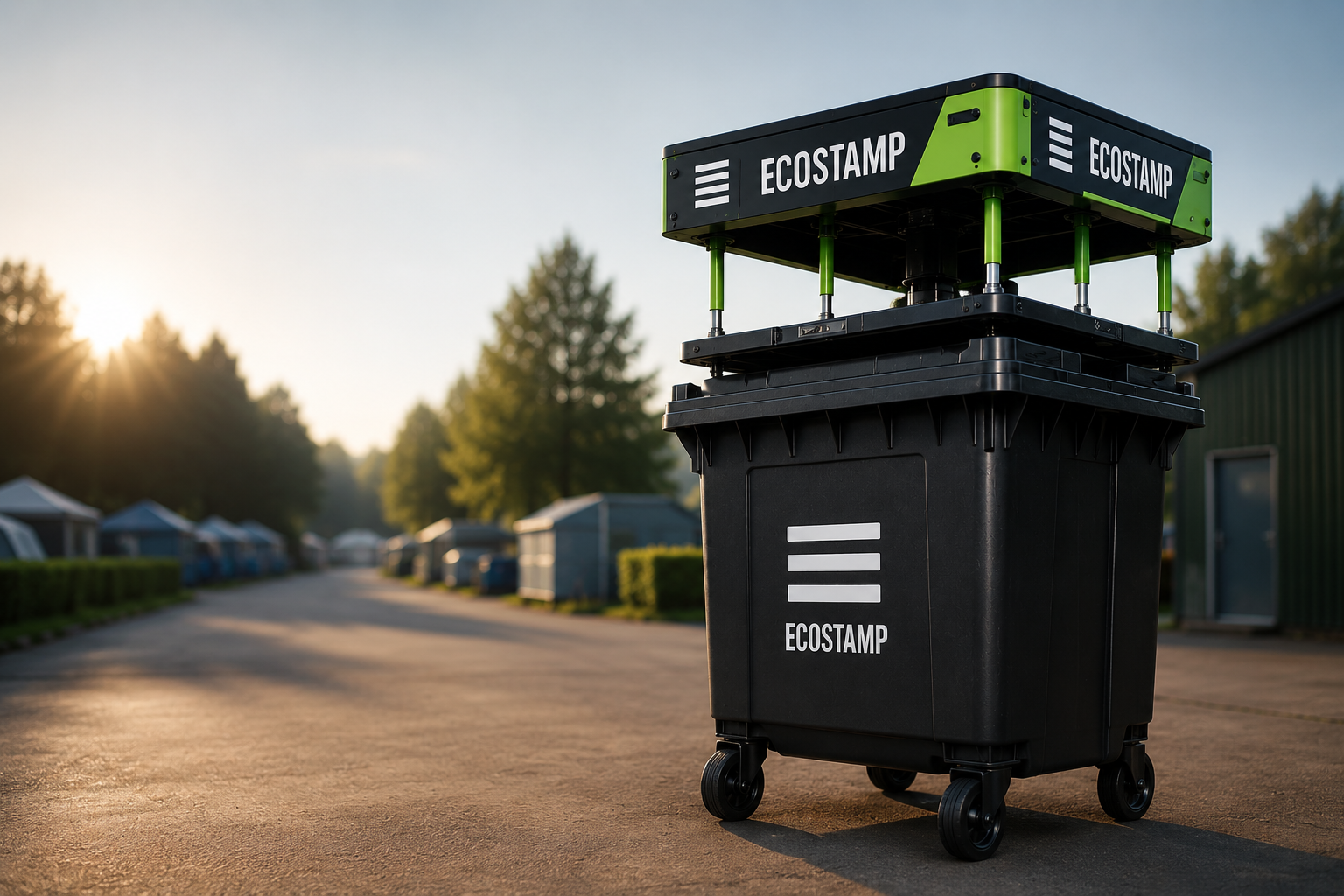
Current development route
Portable commercial compaction concept
Current stage
Pre-feasibility and operator discovery
Portable and fixed-position concepts are being explored for different operating environments and customer requirements.
Operator discovery is exploring whether similar waste-management pressures arise across hospitality, leisure, events, retail and multi-site commercial environments.
The next stages are focused on independent engineering feasibility, prototype development and measured commercial pilots.
The commercial problem
Waste collection can be a recurring operating cost.
Commercial organisations may incur repeated waste-collection costs across bins, sites and collection cycles. Where bins fill quickly, collection frequency and operational pressure may increase.
EcoStamp is being developed around a straightforward commercial question: can more effective use of existing bin capacity help reduce collection pressure without replacing the underlying waste infrastructure?
Any suitability for individual locations, regional operators or national multi-site estates would need to be established through engineering feasibility, operator assessment and measured pilot evidence.
Recurring expenditure
Waste collection is an ongoing operating expense rather than a one-time capital cost.
Visible operational pressure
Overflowing bins, repeated vehicle movements and waste-area presentation create visible commercial consequences.
Established container format
The concept is being designed around the 1100-litre commercial-bin format used by many of the operators currently being considered.
Potential multi-site application
If independently validated, a future solution could be assessed for sites where similar waste-management pressures recur.
Why now
Operators are examining cost, efficiency and environmental impact.
EcoStamp is undertaking early commercial validation with operators that are examining collection costs, vehicle movements, waste-area efficiency and sustainability reporting.
Recurring collection expenditure
Frequent uplifts may create a repeating cost across busy or multi-site operations.
Busy commercial environments
Overflow, staff handling and constrained waste areas can affect normal site operations.
Vehicle movements and reporting
Some organisations are seeking better information about vehicle movements and waste-related environmental impacts.
Designed around existing bins
The concept is being explored around the commercial containers operators already use.
Product strategy
Two concepts addressing one commercial problem.
EcoStamp is exploring two engineering approaches rather than relying on a single installation format. Final product direction will depend on independent feasibility work and operator requirements.
Portable route
Portable EcoStamp
A portable concept being explored for flexible, temporary, seasonal or shared deployment across suitable commercial bins.
- Designed around existing 1100L bins
- Potential movement between suitable bins
- No permanent ground installation proposed
- Possible seasonal and peak-period use
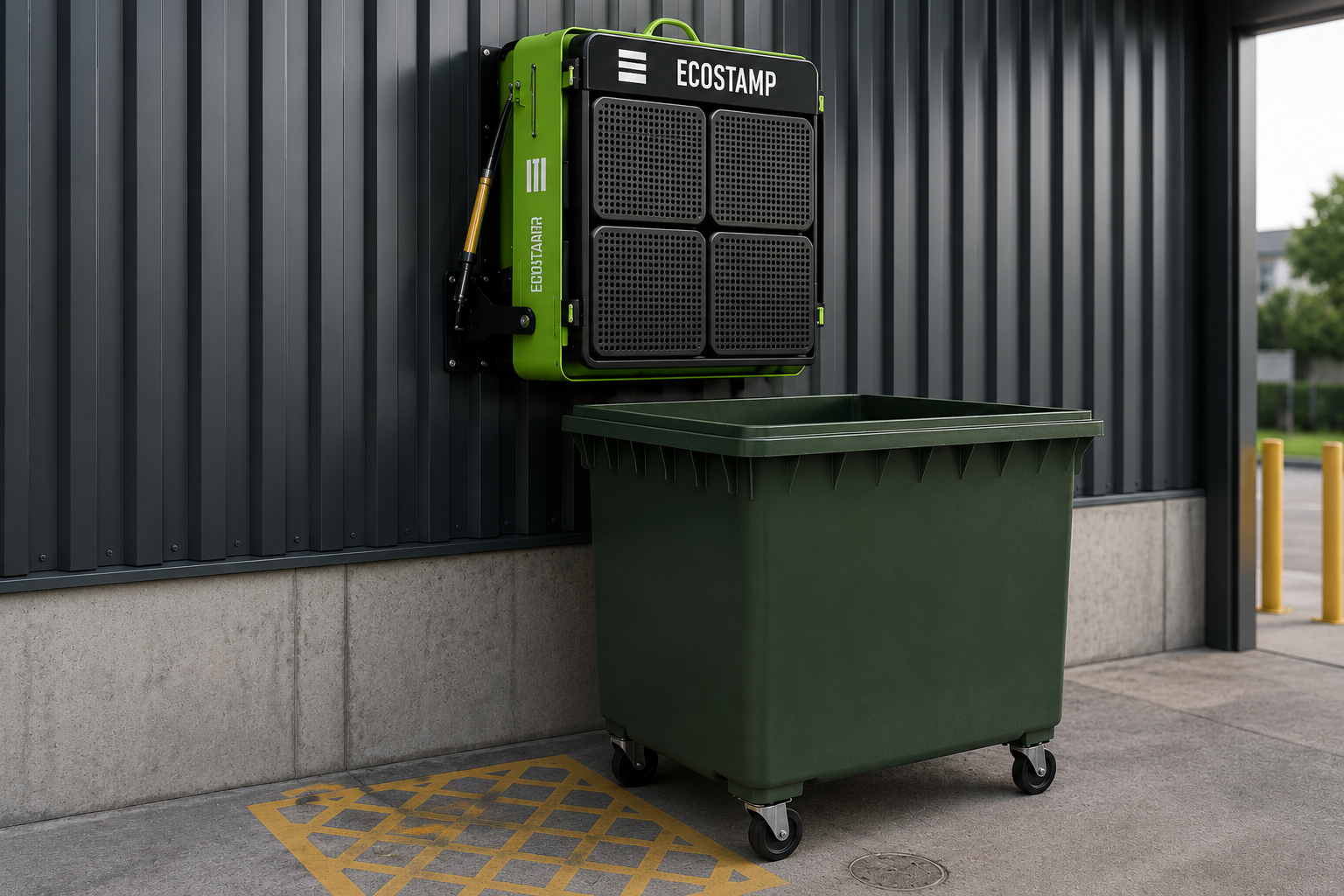
Fixed-position route
Fixed EcoStamp
A fixed-position concept being explored for commercial waste compounds requiring permanent installation and regular use.
- Permanent waste-area positioning
- Potential wall-mounted configuration
- Designed for repeated operator use
- Commercial compound integration
Initial operator-discovery sectors
Exploring environments where waste volume may create operational pressure.
Early operator discovery is focused on sectors where occupancy, footfall, seasonal demand or multi-site operations can create frequent commercial-bin collections.
Hotels and food service
Sites managing regular food, packaging and guest-generated waste.
Holiday and visitor parks
Seasonal environments experiencing concentrated occupancy and fluctuating collection demand.
Festivals and venues
Temporary or high-footfall environments where waste volume can rise sharply over short periods.
Retail and industrial sites
Multi-tenant and multi-site operations using standard commercial waste infrastructure.
Commercial models under consideration
Several routes to market may be assessed.
No final commercial model has yet been selected. The most appropriate route will be informed by engineering feasibility, manufacturing analysis, operator discussions and pilot evidence.
Direct equipment sale
A possible future capital-purchase model for commercial operators or waste-management partners, subject to feasibility and validation.
Lease or service model
A possible recurring arrangement incorporating servicing and support, subject to product development and commercial assessment.
Distribution partnerships
Possible future route-to-market relationships with established commercial-waste or equipment providers.
Strategic licensing
Possible future licensing or manufacturing relationships, subject to validation, commercial assessment and intellectual-property strategy.
Development pathway
A staged route from discovery to measured validation.
EcoStamp is following a development sequence intended to reduce technical and commercial risk before wider market entry.
Pre-feasibility and operator discovery
Understanding real-world operator challenges, validating commercial interest and defining the questions for engineering assessment.
Independent engineering feasibility
Independent assessment of engineering viability, technical requirements, safety considerations and implementation routes.
Alpha prototype development
Design, manufacture and testing of an initial working prototype informed by the feasibility process.
Measured pilot validation and scale preparation
Controlled commercial pilots collecting operational data before manufacturing, servicing and market-entry routes are progressed.
Investment focus
Funding the next evidence-led stage of development.
Any strategic investment raised would be intended to support technical risk reduction, product development and the creation of credible commercial evidence.
Priority areas include independent engineering feasibility, design and safety work, prototype development, intellectual-property strategy, controlled pilot preparation and early manufacturing assessment.
Detailed capital requirements, milestones and investment terms would be provided as part of direct investor discussions and appropriate due diligence.
Early concept development
See the concept principle in action.
Demonstration footage provides an early illustration of the EcoStamp concept and its intended relationship with a standard commercial bin.
Footage may show historic or early-stage prototype material and should not be interpreted as independently validated commercial performance.
Responsible development
Environmental ambition supported by formal reporting.
DH Eco Solutions Ltd has established emissions benchmarks, Carbon Reduction Plans and a long-term Net Zero commitment.
Investor and strategic partner discussions
Discuss the next development stage of EcoStamp.
EcoStamp welcomes preliminary discussions with prospective investors, engineering partners, manufacturers and commercial operators able to support independent feasibility, prototype development and future measured pilots.
This page is for general information only and is not an offer, invitation or recommendation to invest. Any future investment proposal would be subject to formal documentation and appropriate legal, financial, commercial and technical due diligence.