


HYPOTHETICAL 20% COMPARISON
Illustrative annual difference £0Illustrative monthly difference: £0
Illustrative remaining annual cost: £0


Enter current bin, collection-frequency and uplift-cost information to calculate an indicative current-cost baseline. Any percentage comparisons are mathematical scenarios, not predicted EcoStamp performance or savings.
TAKES LESS THAN 30 SECONDSEnter your collection details and select Calculate My Cost Baseline.
Estimated current monthly collection cost: £0
Illustrative monthly difference: £0
Illustrative remaining annual cost: £0
Illustrative monthly difference: £0
Illustrative remaining annual cost: £0
Illustrative monthly difference: £0
Illustrative remaining annual cost: £0
Illustrative monthly difference: £0
Illustrative remaining annual cost: £0
EcoStamp remains subject to engineering feasibility, testing and independent validation.
Enter your details to email your current collection-cost baseline and illustrative comparisons.
Commercial 1100L test rig, force/crushing analysis, selected bin/waste testing, wall-mounted feasibility and an initial manufacturing-cost review.
Functional alpha prototype, design/verification, supplier quotation pack and initial compliance planning.
Beta field-trial units and a pilot-ready design pack, subject to prior evidence.
Production-ready documentation, quality plans, manufacturer handover and technical files for independent compliance assessment.
Phase 1 may be commissioned independently. Later stages require evidence review, funding and separate agreement. All timings are indicative.
Operators have described bins that fill unevenly, contain bulky packaging or trapped air, and create overflow or handling pressure.
EcoStamp is being developed to test whether controlled compaction of suitable material could improve use of existing bin capacity. Any effect on uplift frequency, cost or environmental outcomes must be measured.
Overflowing bins and congested waste areas create operational challenges for staff, contractors, customers and neighbouring businesses.
Frequent collections can increase operating costs, vehicle movements and disruption to normal site activity.
Poorly managed waste areas can affect staff efficiency, site presentation and the overall customer or guest experience.
Hospitality, leisure and event environments can experience sharp increases in waste generation during busy trading periods.
EcoStamp is being developed as a commercial waste-compaction concept designed to work with existing 1100-litre bins rather than requiring operators to replace their current waste containers.
The EcoStamp concept is positioned above a suitable existing commercial 1100-litre bin.
Waste is compacted within the existing bin to explore whether available capacity can be used more efficiently before collection.
The existing waste contractor continues to collect the same commercial bin through the site's normal waste collection arrangements.
EcoStamp is currently exploring two engineering approaches intended to suit different commercial environments and operating requirements.
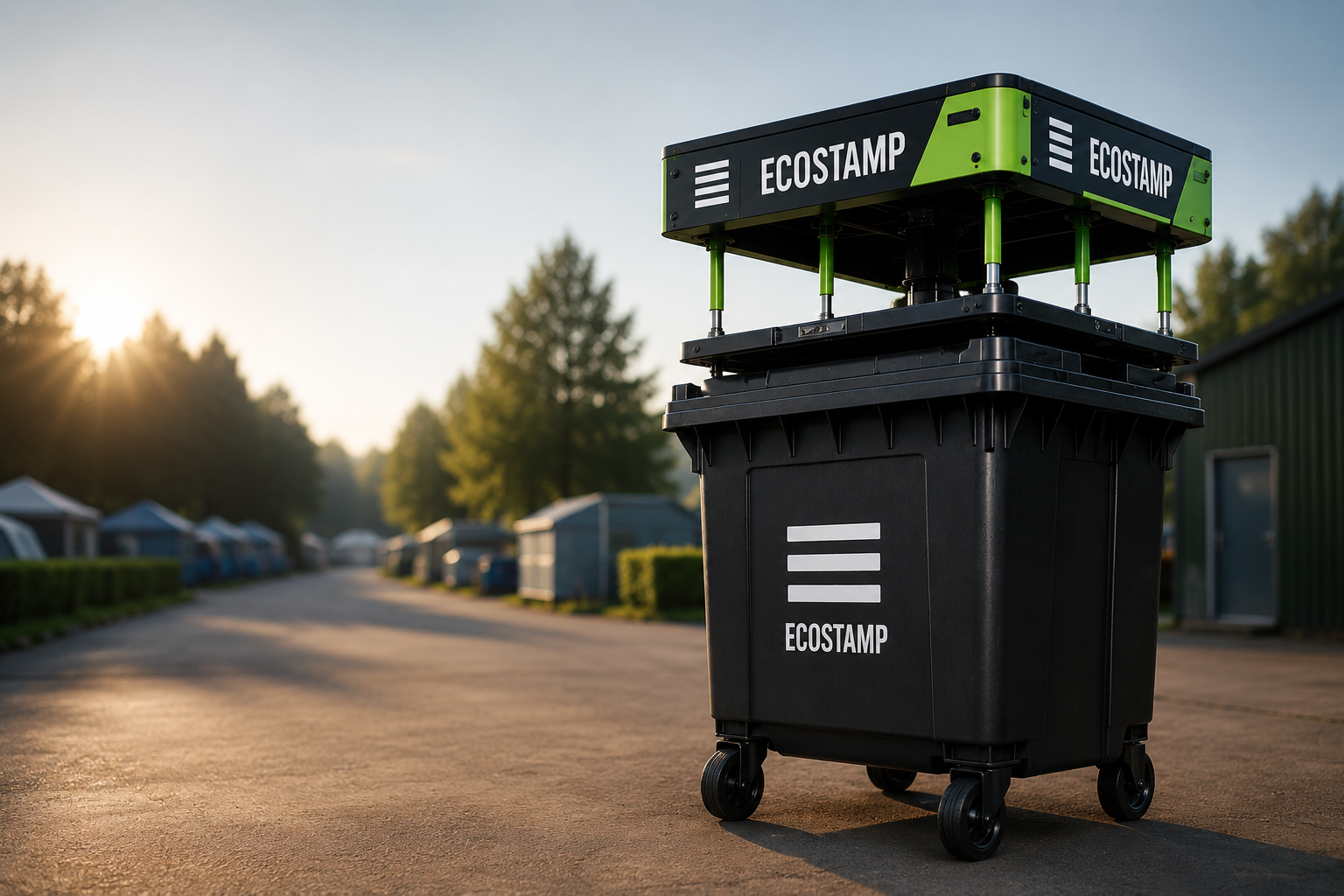
A portable concept being explored for temporary deployment, seasonal demand and sites requiring flexible operation across suitable commercial bins.
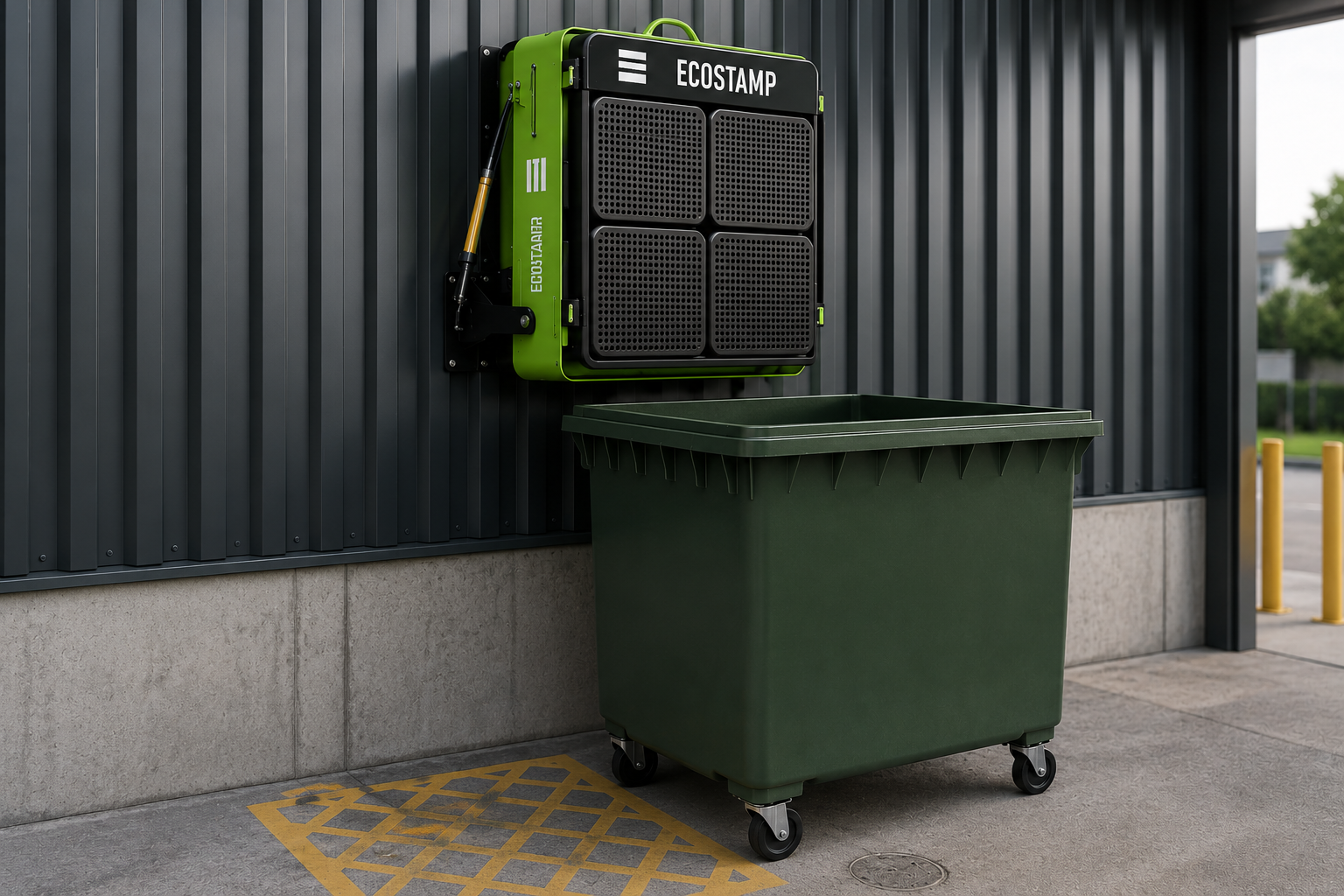
A fixed-position concept intended for commercial waste compounds requiring permanent installation and regular operational use.
Hotels, restaurants, food-service venues and high-footfall visitor destinations.
Campsites and holiday parks managing seasonal occupancy and guest-facing waste areas.
Festivals, temporary venues and locations experiencing concentrated periods of waste demand.
Retail, industrial and multi-site environments using standard commercial bins.
Watch early demonstration footage showing the design direction currently being explored as EcoStamp progresses through pre-feasibility and early commercial validation.
Demonstration footage represents concept development only and should not be interpreted as validated commercial or operational performance.
Explore operator information →Whether you manage commercial waste operations or are exploring the investment opportunity, select the route that best reflects your interest in EcoStamp.
Explore target applications, current product concepts, operator discovery and future pilot discussions.
Operator information → For investorsExplore the target market, development status, roadmap and current strategic investment opportunity.
Investor information →DH Eco Solutions Ltd has published Carbon Reduction Plans, established emissions benchmarks and continues to work towards its long-term Net Zero commitment. Our participation in the Net Zero Nation programme supports this ongoing journey and reflects our commitment to continual environmental improvement.
EcoStamp is seeking commercial operators, future pilot partners and strategic investors to help inform the next stage of development before independent engineering feasibility begins.